Perfume & Fragrance Formulation
Formulation sits between the creative idea and the production line. It defines exactly what is dosed, in which proportion, in which base and at which concentration — so the same product can be reproduced batch after batch.
AROMA NOVA formulates both new compositions and adaptations of existing directions from its portfolio of more than 6,000 fragrance formulas.
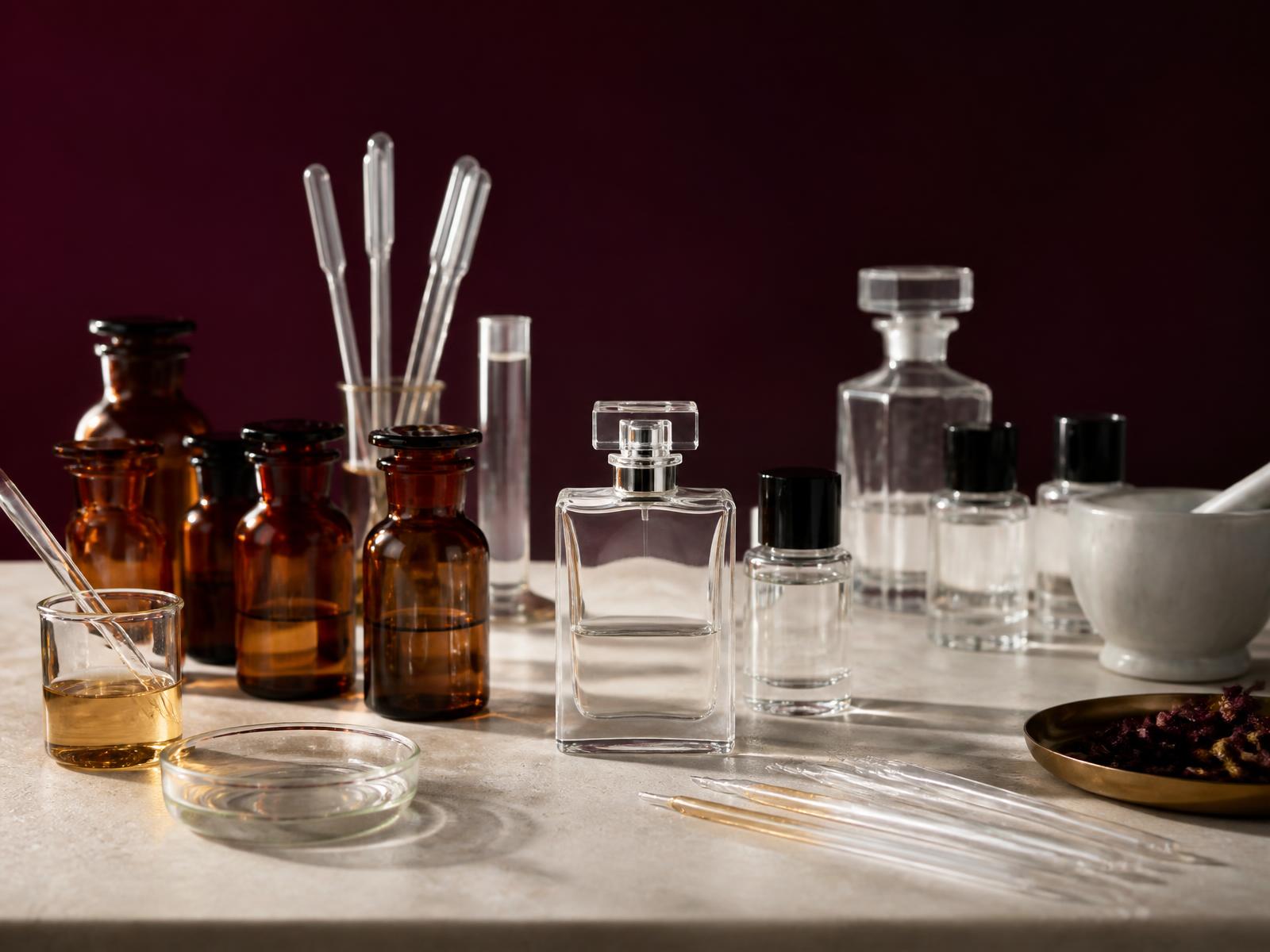
What does perfume formulation involve?
Perfume formulation is the technical work of turning a fragrance concept into a defined, reproducible formula: selecting and balancing the fragrance composition, defining concentration and base, and confirming the formula performs consistently in the finished product.
What a formula defines
- The fragrance composition and its proportions
- Concentration of the fragrance in the finished product
- The alcoholic or other base used for the chosen product format
- Behaviour of the composition over time on skin and in the bottle
- Ingredient information required for documentation and labeling
Concentration and product format
Concentration influences character, intensity and longevity as well as cost and positioning. The most common finished formats are described below; exact ranges vary between manufacturers and products.
| Format | Character |
|---|---|
| Extrait de parfum | Highest fragrance concentration, greatest longevity |
| Eau de parfum | High concentration, the most common premium format |
| Eau de toilette | Lighter and fresher, typically shorter longevity |
| Eau de cologne / body mist | Light concentration for frequent, generous use |
Formulation and regulatory information
Depending on the product and market requirements, formulation output also feeds the documentation package: ingredient and allergen information, INCI nomenclature for labeling, and the data needed for a safety assessment.
Frequently asked questions
What is the difference between eau de parfum and eau de toilette?
The difference is the concentration of fragrance composition in the finished product. Eau de parfum is more concentrated than eau de toilette, which generally makes it more intense and longer lasting.
Can you reformulate an existing perfume?
Yes, depending on the information available for the existing product and the objective of the reformulation.
Do you consider IFRA guidance during formulation?
IFRA standards are among the considerations relevant to fragrance formulation. Applicable requirements depend on the product type and its intended market.
Start your perfume project
Tell us about your brand, your market and the fragrance you have in mind. We will reply with the next practical step.